Actionaly
Designing an AI assistant 630,000 parents could trust, by deciding where AI should not show up.
The problem
Actionaly connects K to 12 schools and families in 70+ U.S. school districts, reaching about 630,000 parents. Its early product served district administrators and educators, the people who bought it and used it daily. Only 2% of parents used the mobile app.
Parents were juggling school life across too many apps, emails and portals, and felt always behind. With AI maturing fast, Actionaly saw a chance to win over this under engaged audience without losing the districts that drive revenue.
How I worked
Find where parents struggle
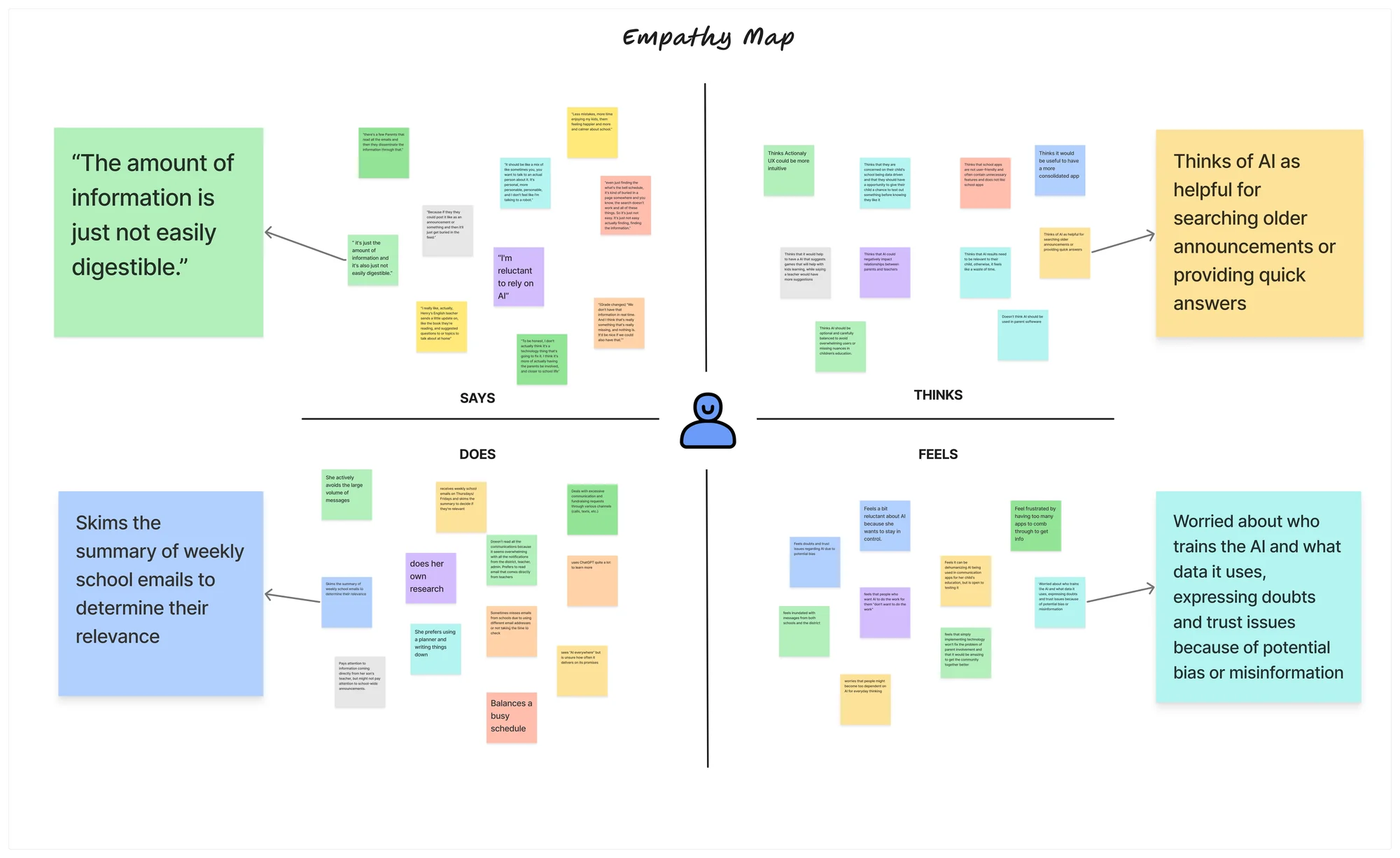
Our team analyzed 10 school communication tools and interviewed 8 parents, and I synthesized the findings into three needs: less to check, less repetitive work, one place for everything. Only 2 of the 10 tools offered a true one stop solution. Parents were open to AI, but only if it came from their school and they could turn it off.
Go from less is more to organized is more
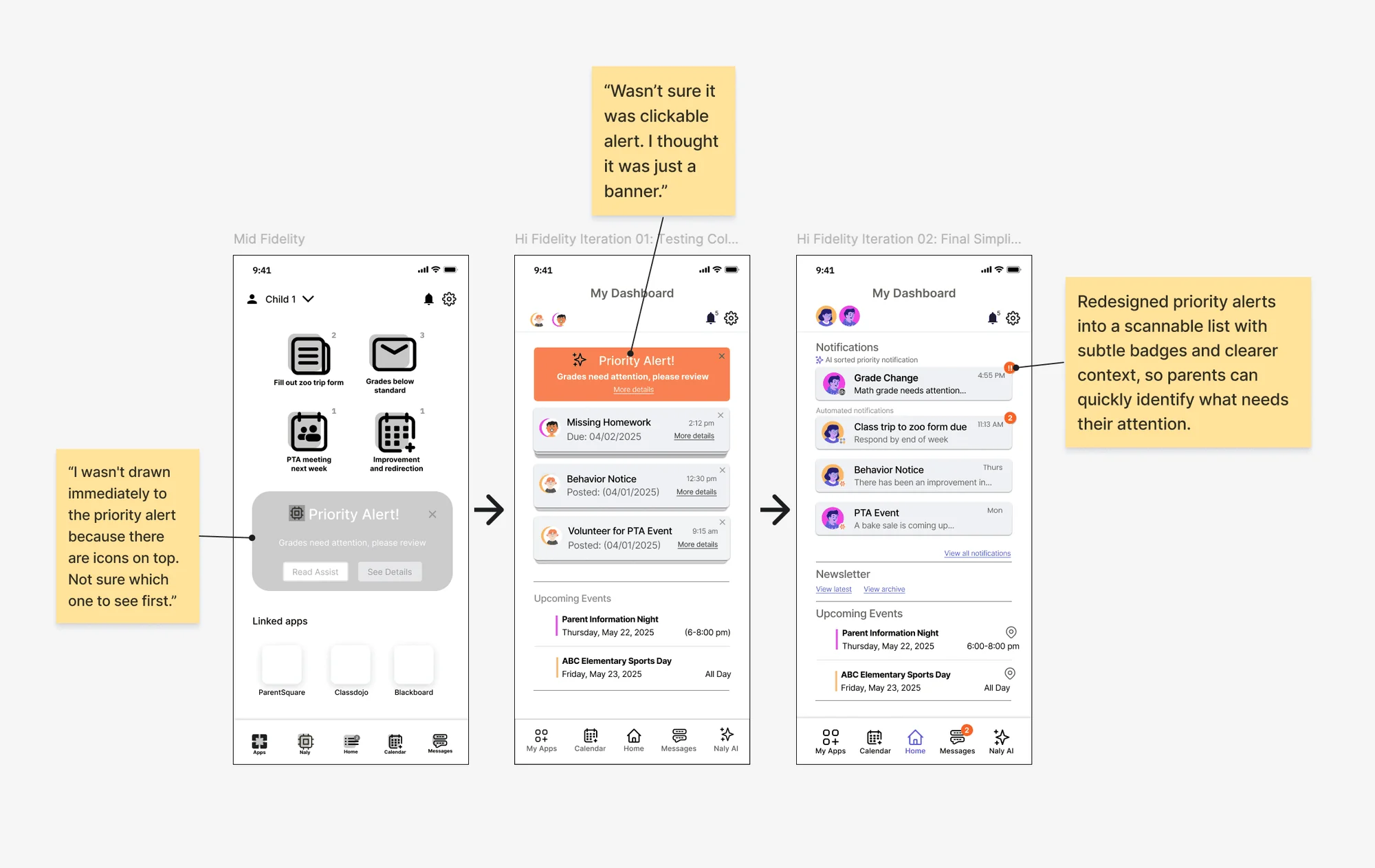
I restructured the dashboard after testing proved our first idea wrong. Because overload was the top pain point, our first dashboard stripped features down to large icons, organized by child. In 7 moderated sessions, parents told us the opposite: they wanted rich functionality, as long as they knew what to look at first. We moved to a priority section at the top, ordered by time and urgency, with subtle color cues for each child.
Rethink where AI shows up
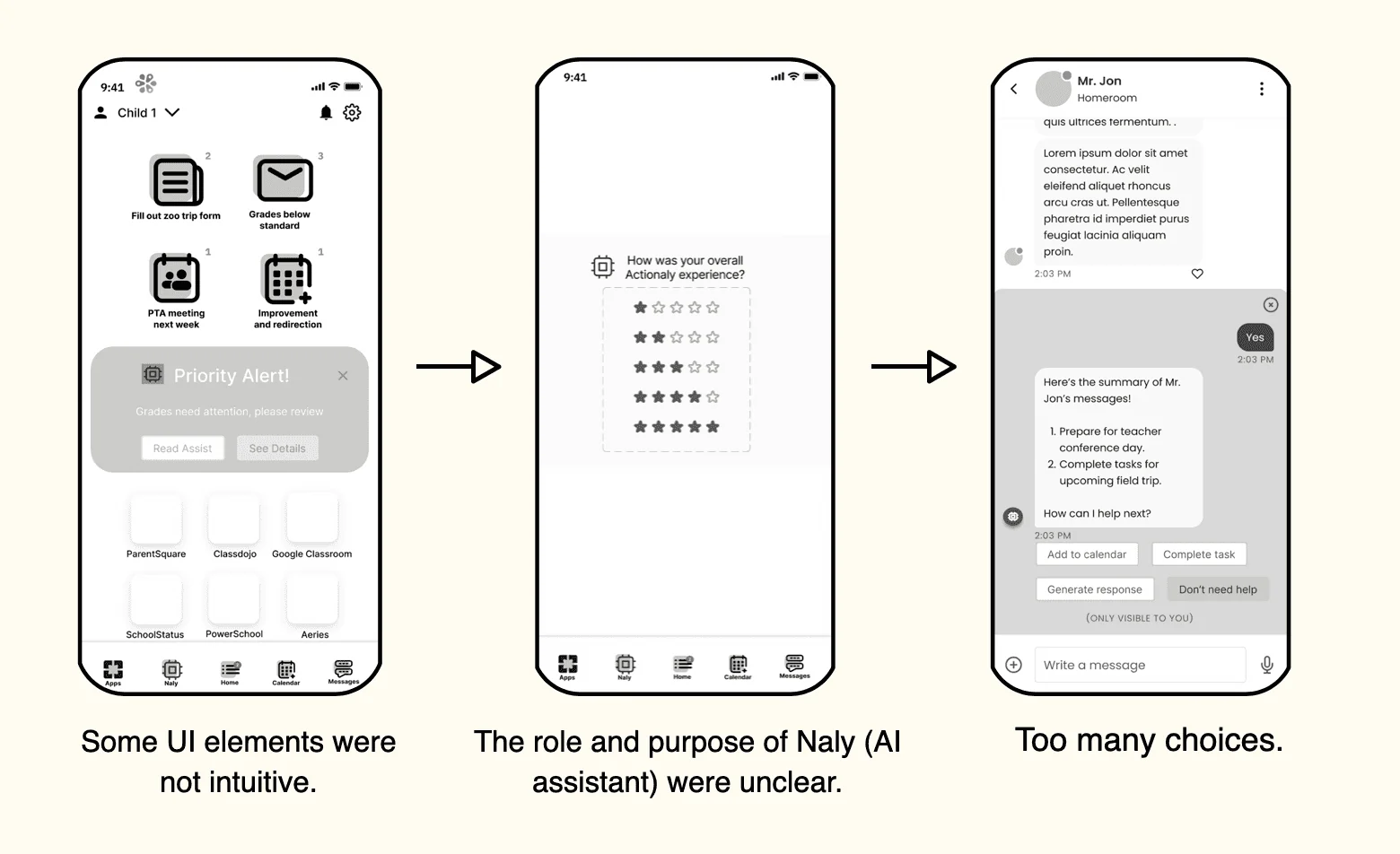
I redesigned Naly, our AI assistant, after testing showed it appeared too often and parents didn't know what it did. I asked whether everything needed AI and decided no: Naly steps in only where it saves real effort, and simple automation handles the rest.
Final design
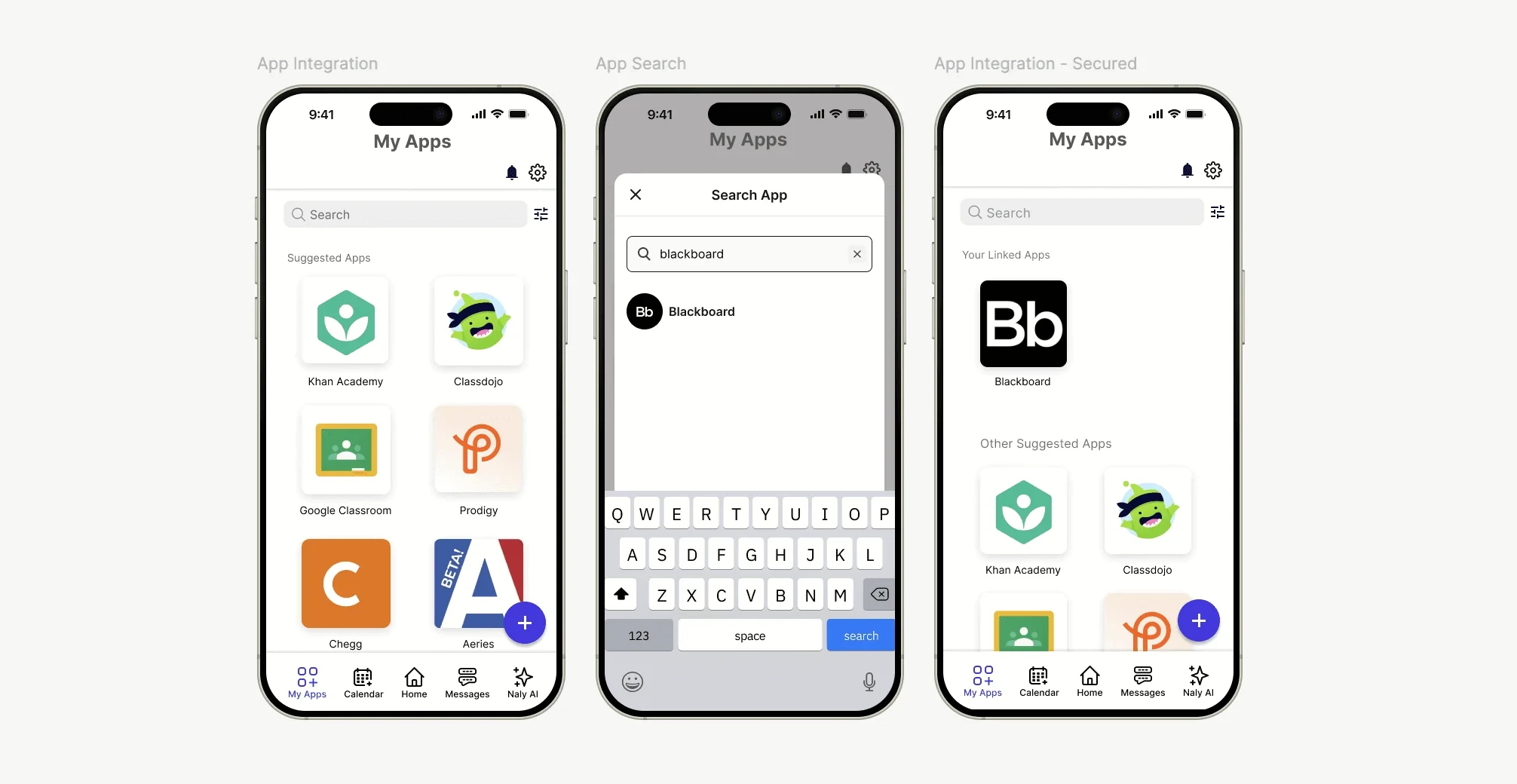
A unified dashboard that shows what needs attention today across every child, integrations that bring tools like Blackboard into one place, and Naly as an embedded assistant. Naly summarizes newsletters and grades, flags urgent items and drafts quick replies to teachers. Parents control when AI helps.
Outcome
I presented the final design to Actionaly's founder, who was happy with the direction. There is no live data yet, so I judged every design decision against three KPIs we set with stakeholders: regular app engagement, task completion and adoption of Naly's suggestions.
What I would do differently
Trust beats novelty. Parents were open to AI, but only when it felt transparent and tied to their child's school. Naly was most valuable when it quietly removed effort instead of asking parents to talk to yet another interface. Next, I'd embed Naly directly in existing screens and tune its tone and frequency for different kinds of parents.
Next case study