The Sourcing Club
A B2B matchmaking platform that helps fashion brands and designers find the right overseas factory, with trust built into every step.
The problem
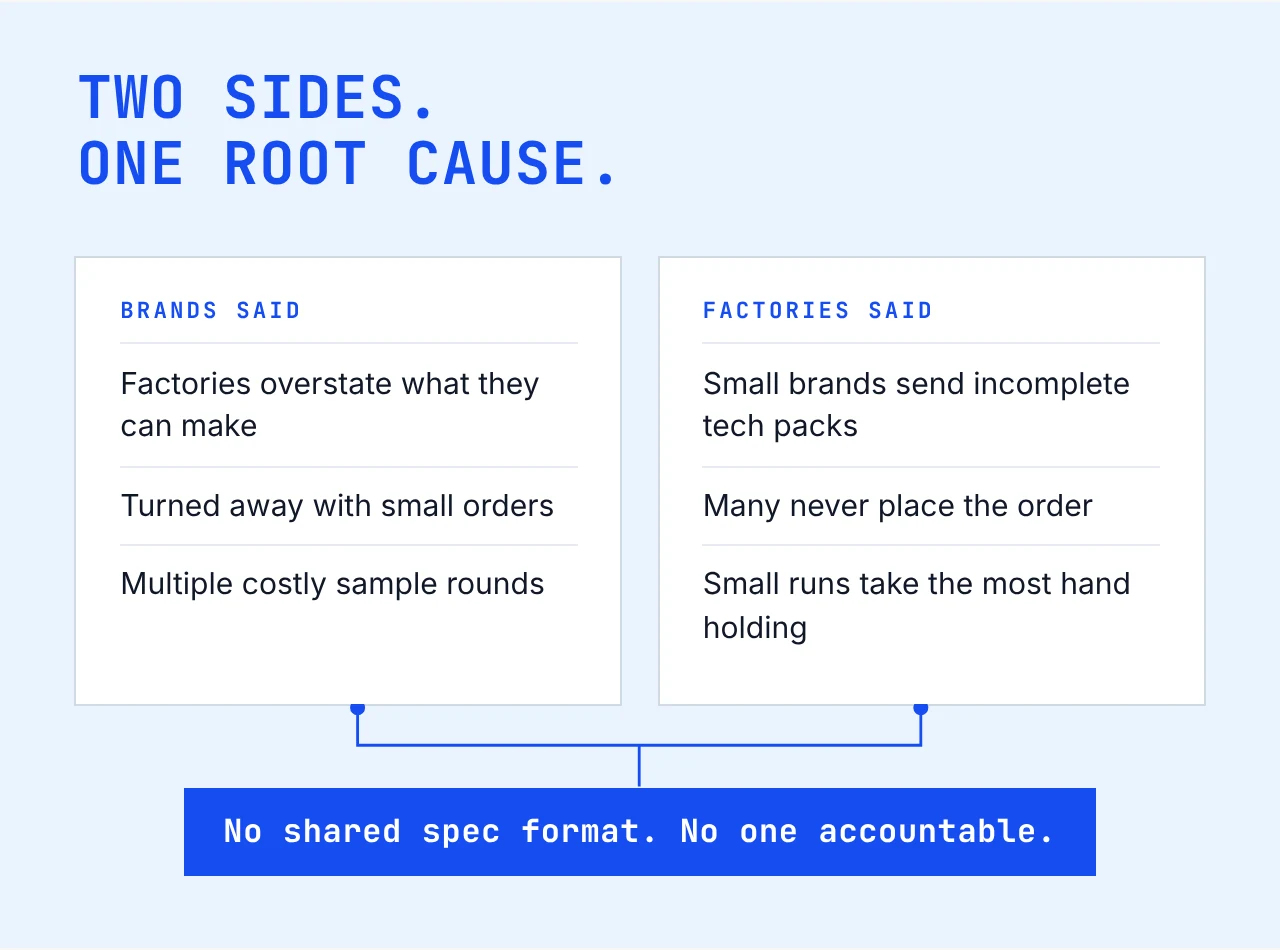
Small and midsize fashion brands and independent designers have no reliable way to find and vet overseas factories. Most factories won't quote below 1,000 units, and brands can't tell a real factory from a trading company middleman. One first time founder we interviewed paid a connector just for an introduction, then went through 3 to 4 rounds of samples.
Factories have the opposite problem. Small brands are high maintenance, send incomplete tech packs and often never place the order. Alibaba is huge, but smaller brands get lost in it, and its listings range from great factories to middlemen.
How I worked
Learn the problem from both sides
We talked with production managers, fashion designers, a manufacturer, a first time brand founder and factory owners at Première Vision NY. I'd spent years creating tech packs for overseas factories, so I could see past the surface complaints to the root cause: no shared spec format and no one accountable when a sample came back wrong.
Scope the MVP around trust
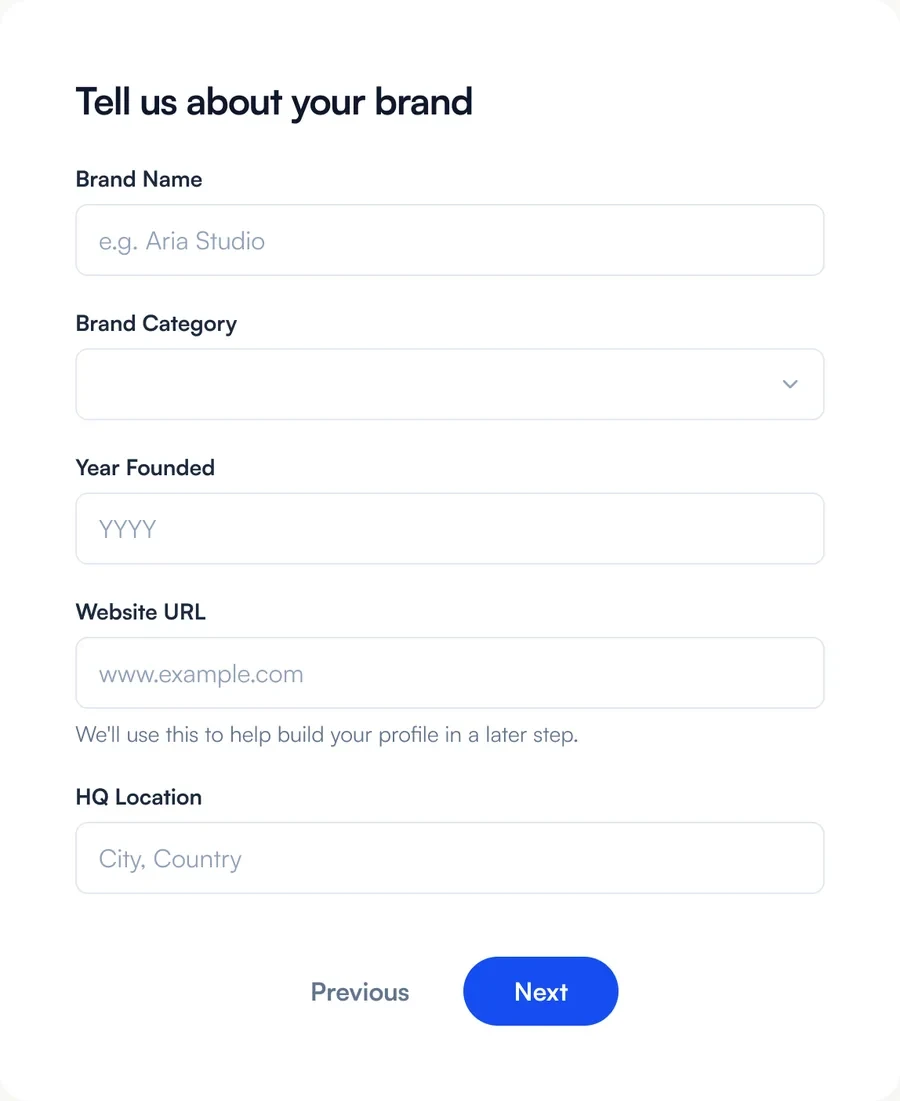
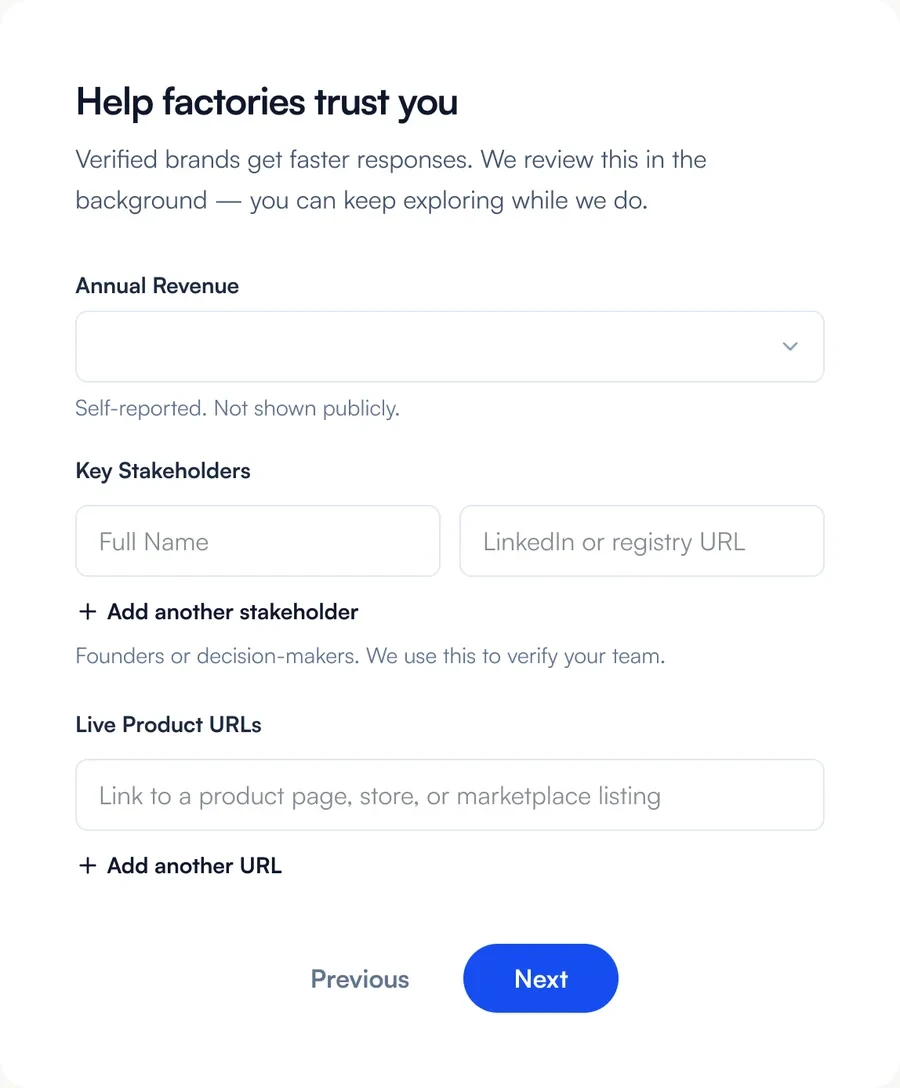
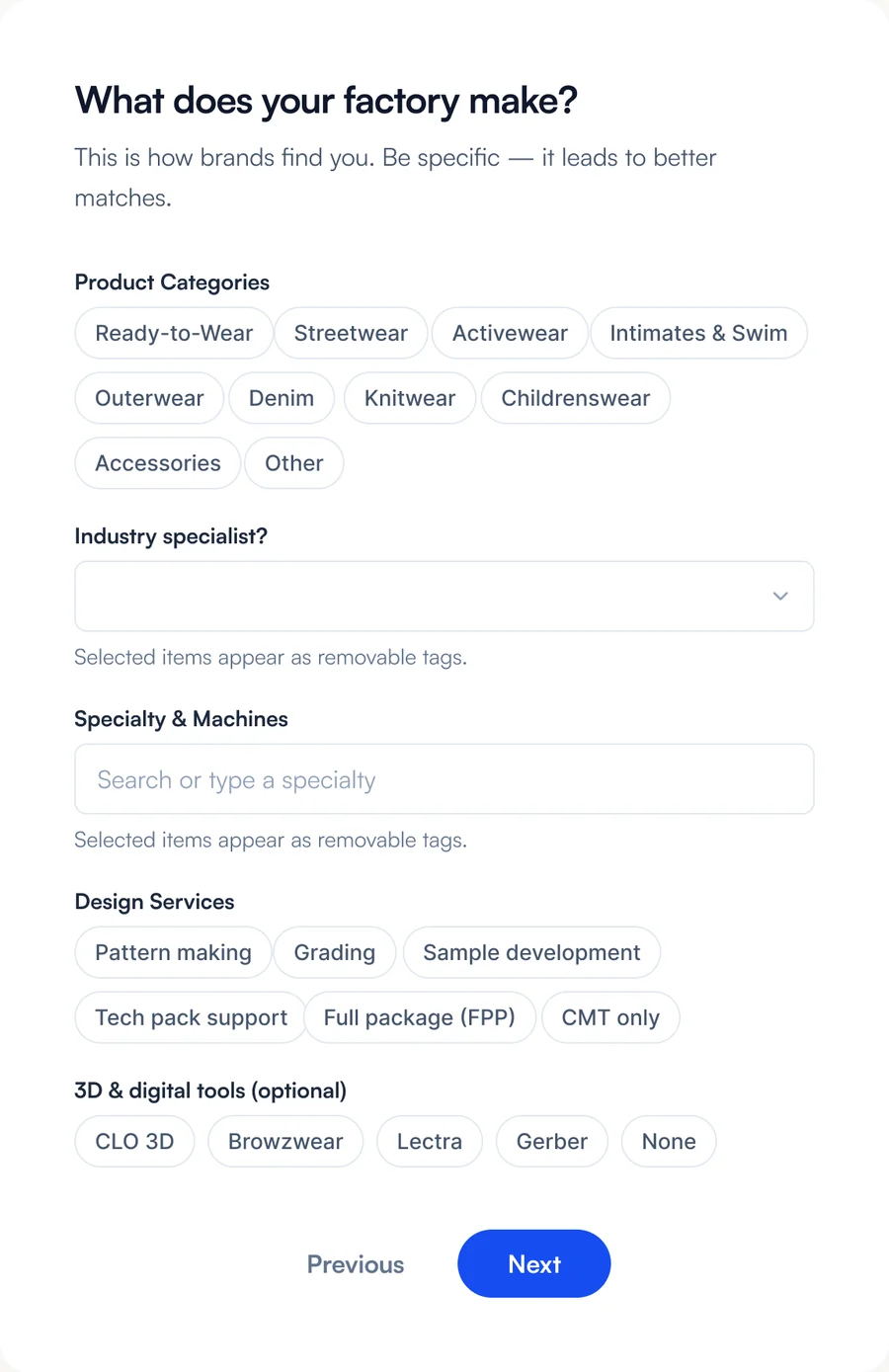
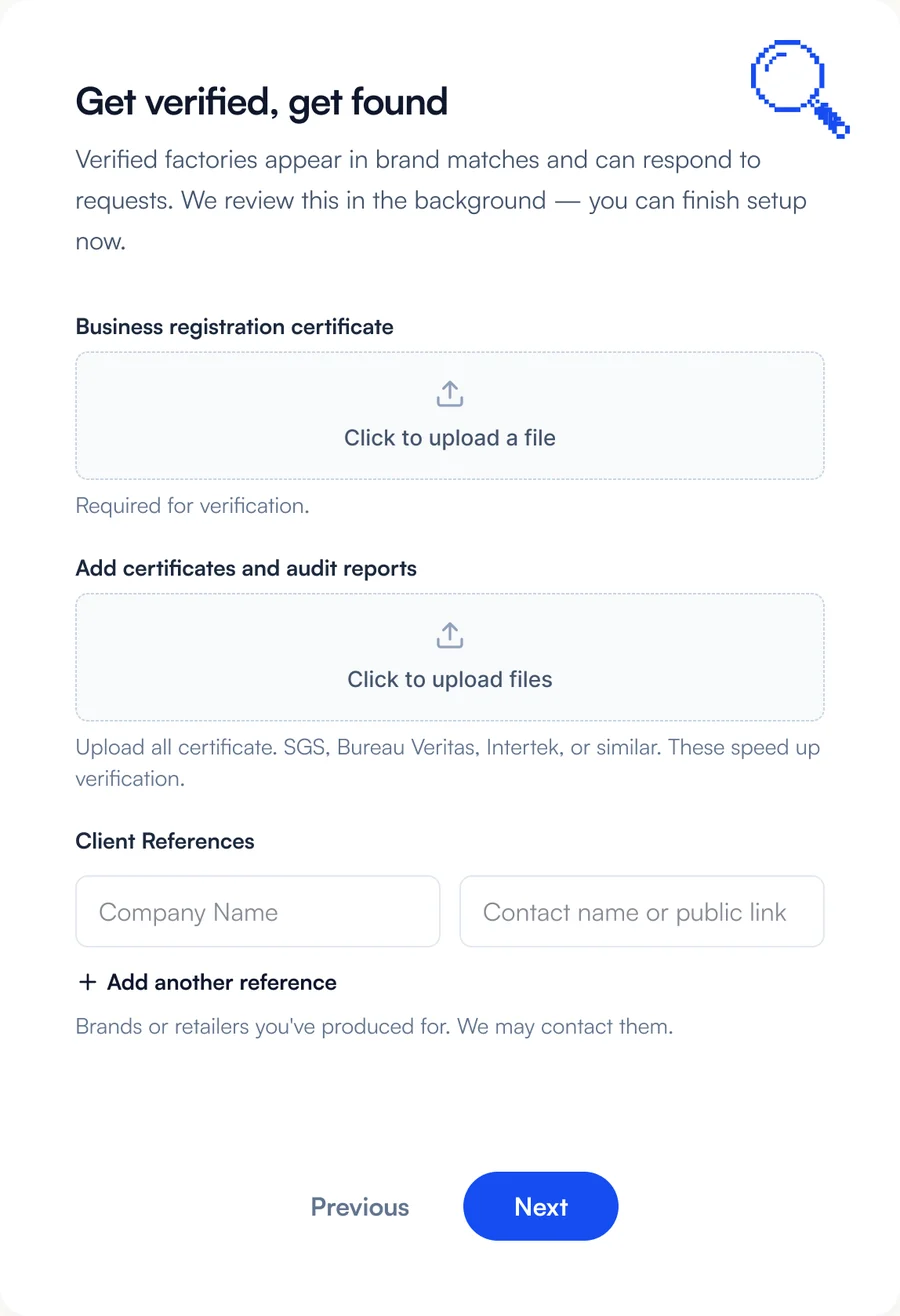
I chose matchmaking over order tracking for the MVP, because tracking is useless until a brand finds a factory worth tracking. I chose a single verified status over a tiered system, so a brand understands it at a glance. Then I designed the onboarding, verification and profiles for both sides. I started in Google Stitch because it was free, which let me compare prototype directions in minutes before spending limited usage on other AI tools and committing in Figma. When an automated check can't confirm something, the brand or factory sees which item failed and how to fix it. Until it clears, brands can keep browsing factories and factories can keep browsing projects.
Test with a factory
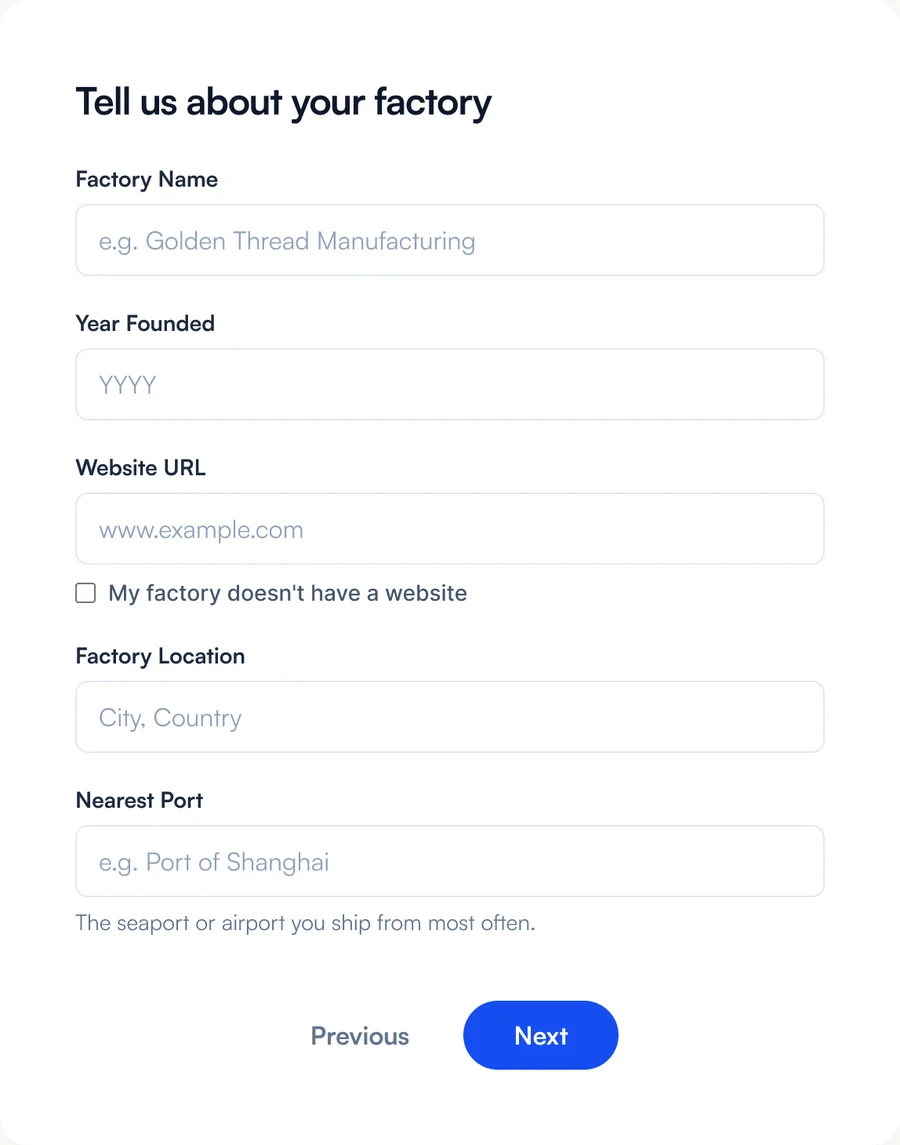
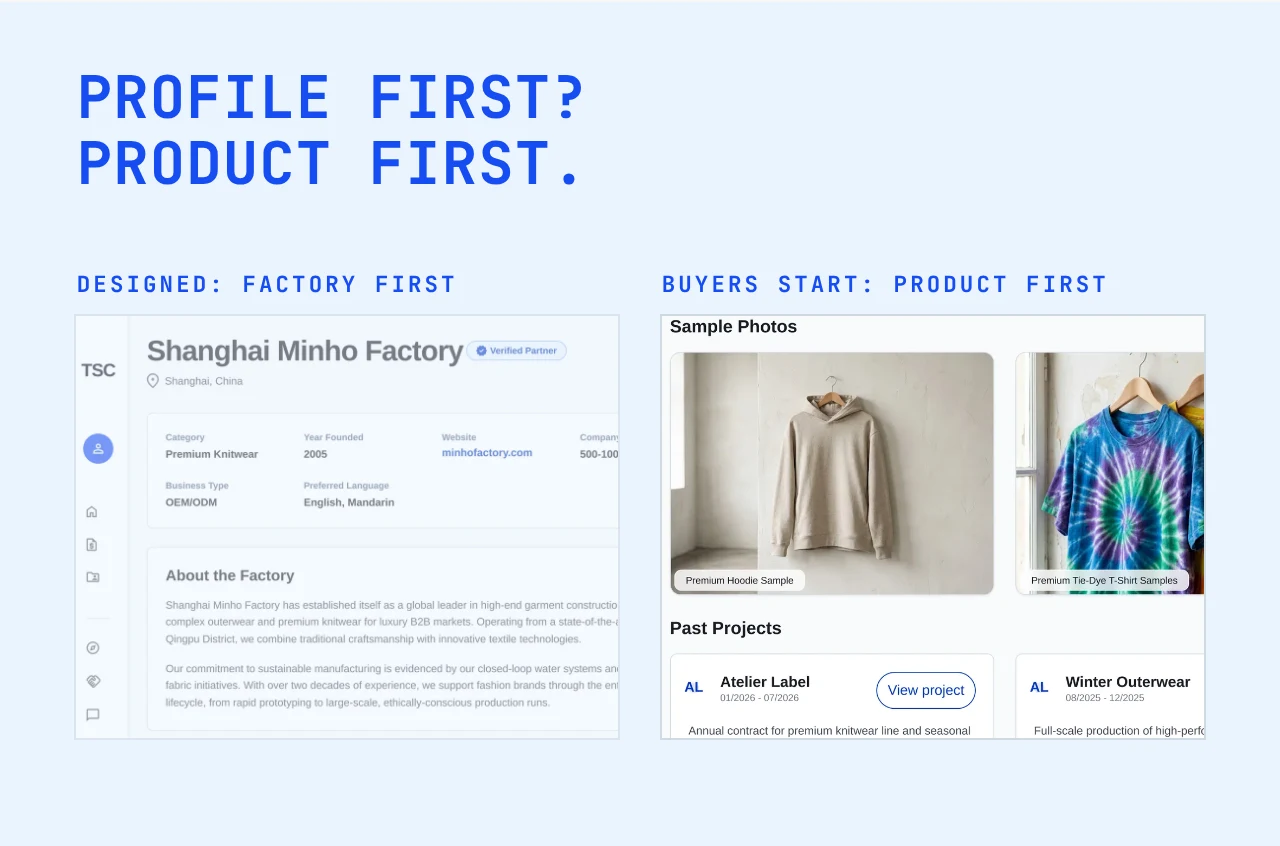
We tested the factory flows with an established apparel factory. One answer reframed the product: the factory owner estimated that only 20 to 30% of what factories enter in a capability form would be true. Trust would have to come from real orders, not self reported profiles. They also said buyers look for real product photos and fabric details first, and AI generated descriptions can't replace those.
Final design
Brands browse and favorite factories for free, and messaging unlocks once a quick business verification clears in the background. Factories get a guided onboarding and a profile built around what they make. Together we designed AI that turns a brand's few sentences into a structured request for quote, matched to factories by order size. The brand reviews and edits that request before any factory sees it, and can skip the AI step.
Outcome
We launched a waitlist landing page and got sign ups from factories we met at trade shows and from brands through referrals. The factory test confirmed that escrow and range based quotes would earn trust, and showed that the profile first structure had to change before launch.
What I learned
Test the riskiest assumption first. We tested the factory side after the screens were designed, and the session showed the structure was built around the wrong starting point. Even a factory that disliked Alibaba wouldn't leave it, because that's where the orders are. A new platform has to win on results, not just a better experience.
Next case study