Levi's underwear
I led underwear design for North America and Latin America inside a global team, adapting one global line to how my regions buy, as sales grew from $10M to $50M.
The problem
One global line had to work in markets that buy differently. Black, navy and heathers sold everywhere, but the fashion colors that sold in Europe often didn't sell in my regions, and every season I had to prove what would with sales data.
Then the design had to survive production. My regions used different factories, and samples often came back different from what we approved. It's the problem every product team knows: design intent gets lost in handoff.
How I worked
Lead design direction with proven data
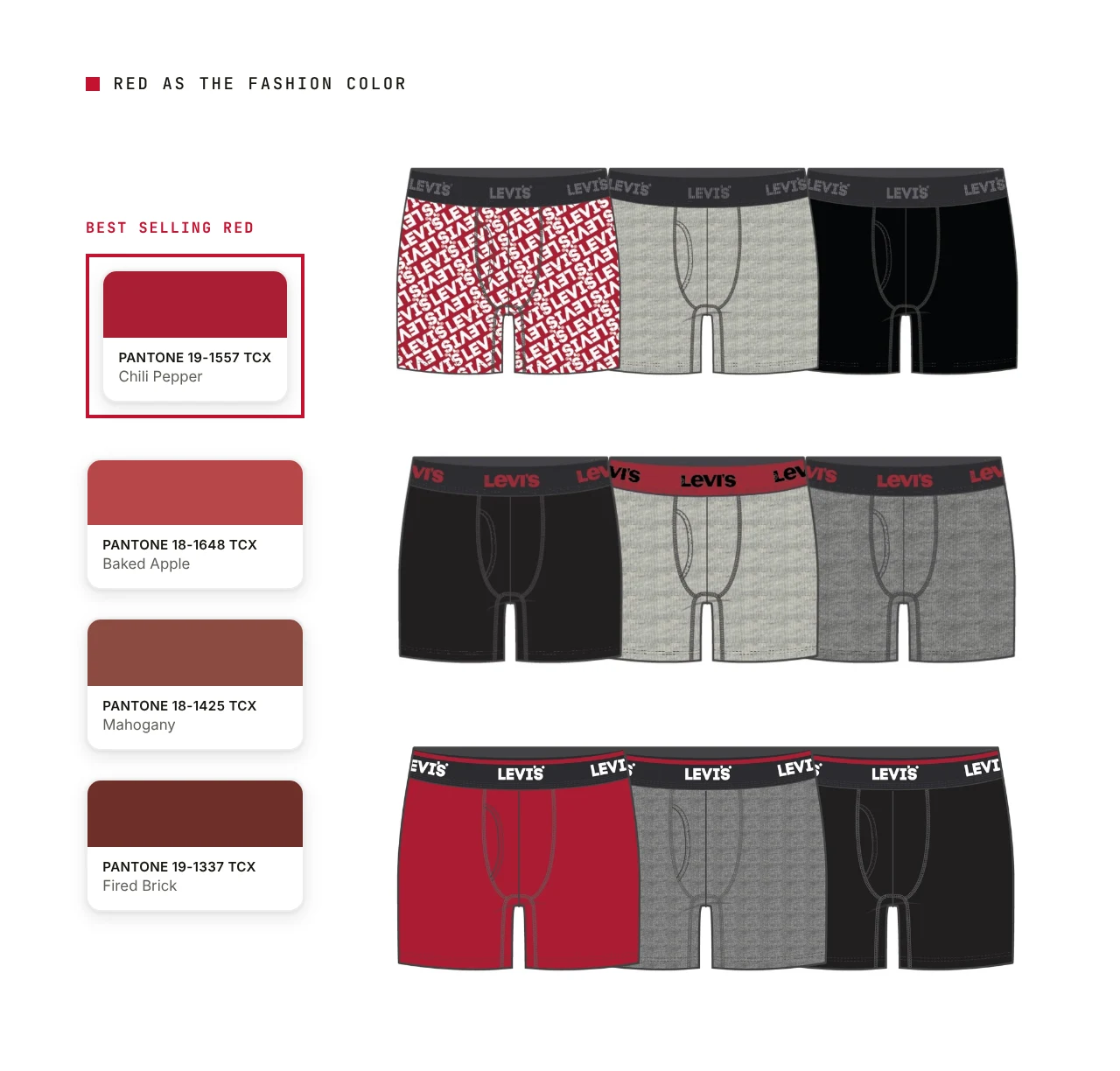
Black, navy and heathers were best sellers in every region. The real choice was the fashion color that makes a pack stand out. Europe's team designed toward nudes and pinks, which fit their coastal vacation market. In my regions, buying follows holidays like the 4th of July, Labor Day and Christmas, and red sold. I presented that case with sales data to Levi's global directors and lead designers across apparel and accessories, and worked closely with Europe's team so both directions held inside one global line. Red became our best selling fashion color, and we kept it.
Build a design system factories can follow
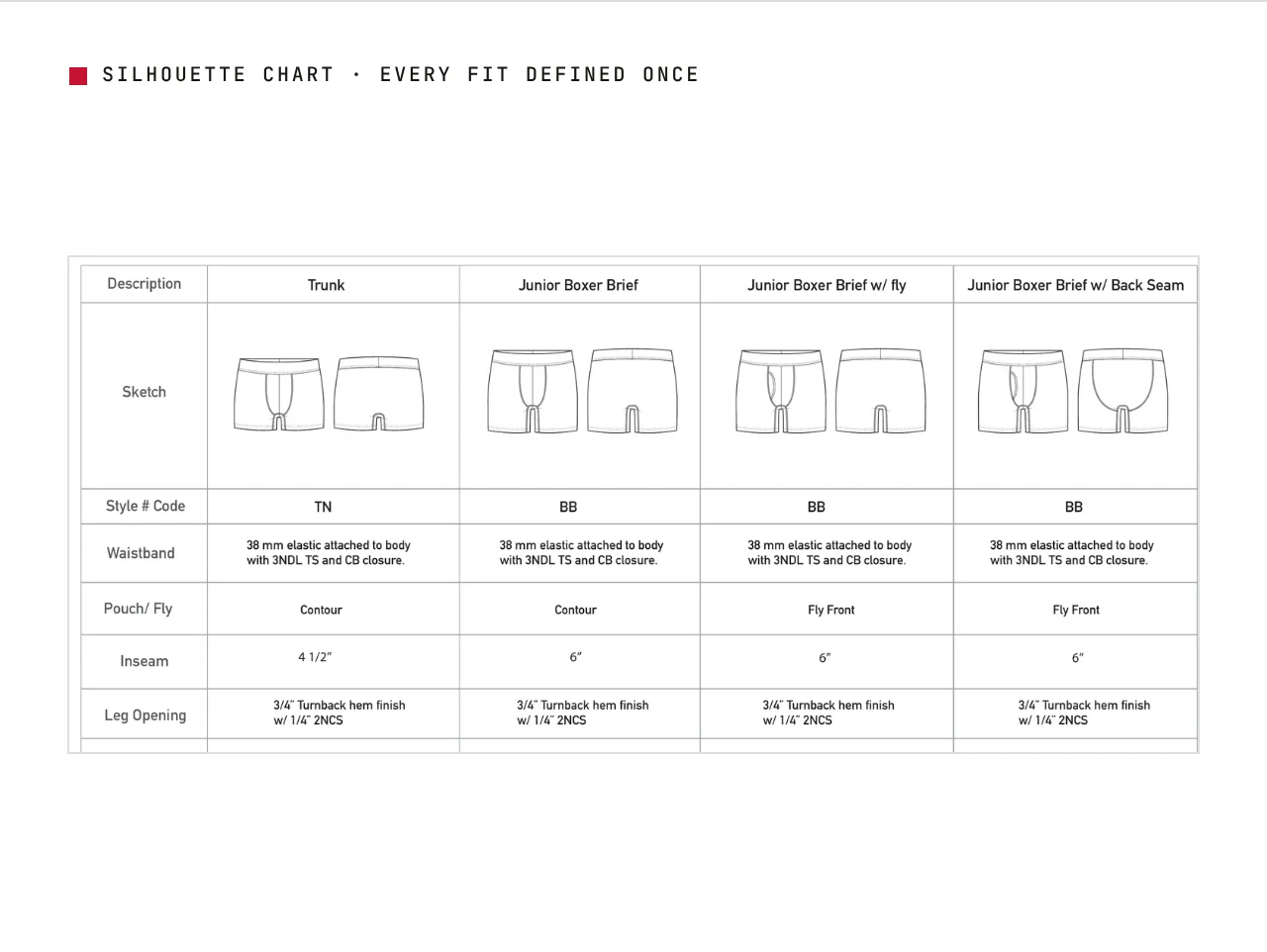
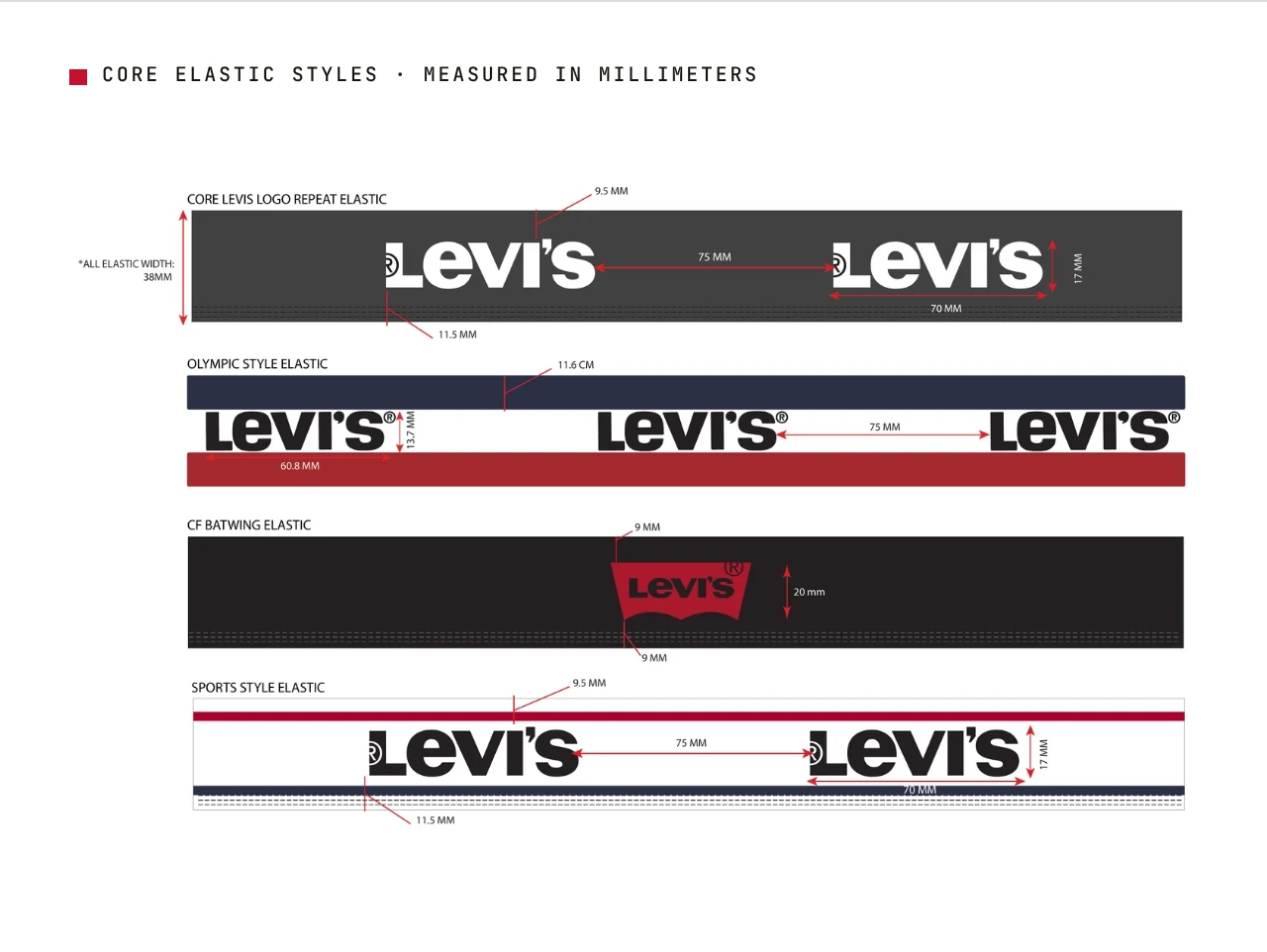
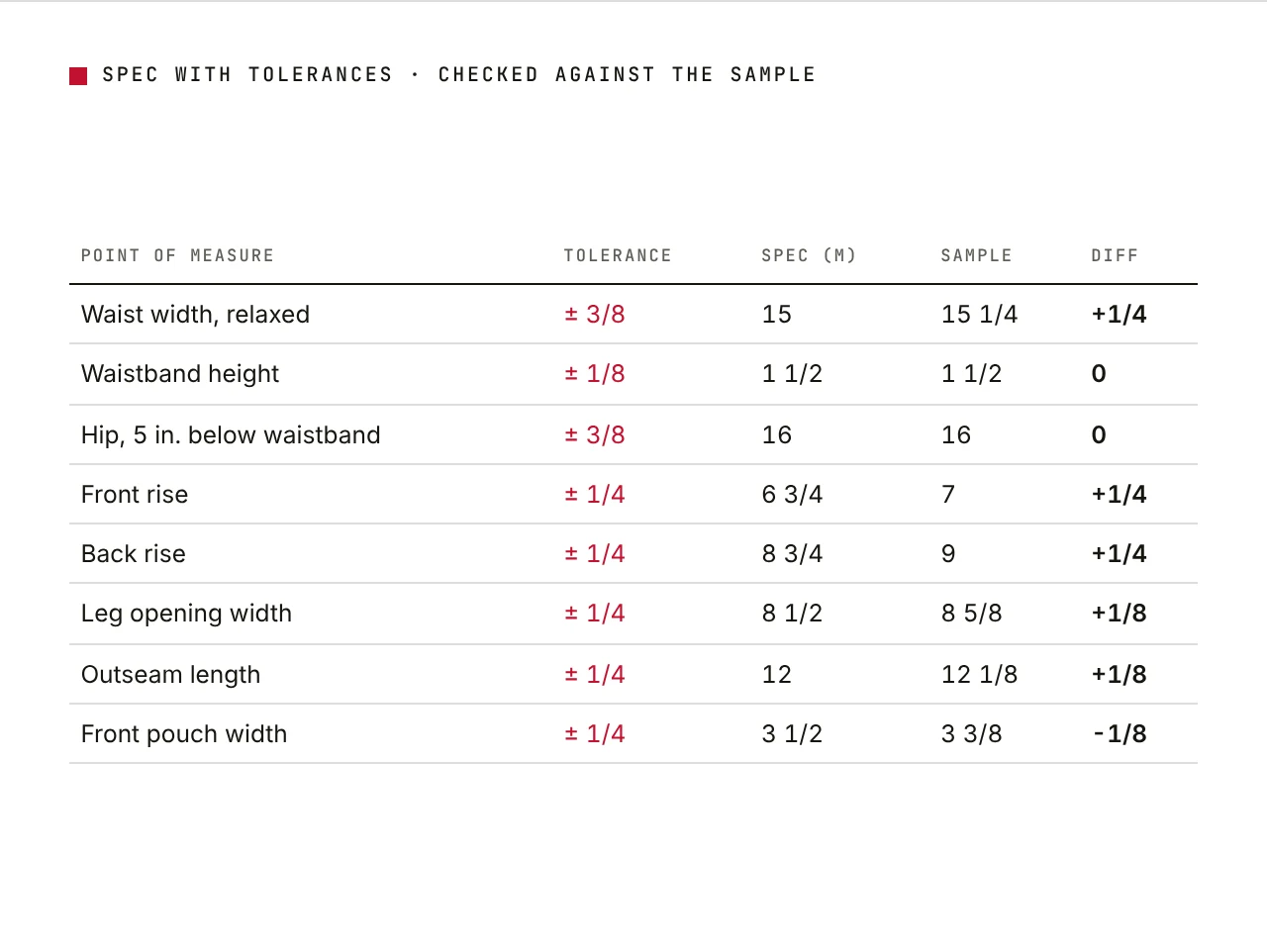
Every extra round of samples held production back. To cut mistakes at the source, I built a design system for our factories: silhouette charts, logo consistency rules, and clear standards for fabric, fit, trim quality and design. Every factory worked from the same source of truth, the way a component library does for a product team.
Make sample approval a real QA loop
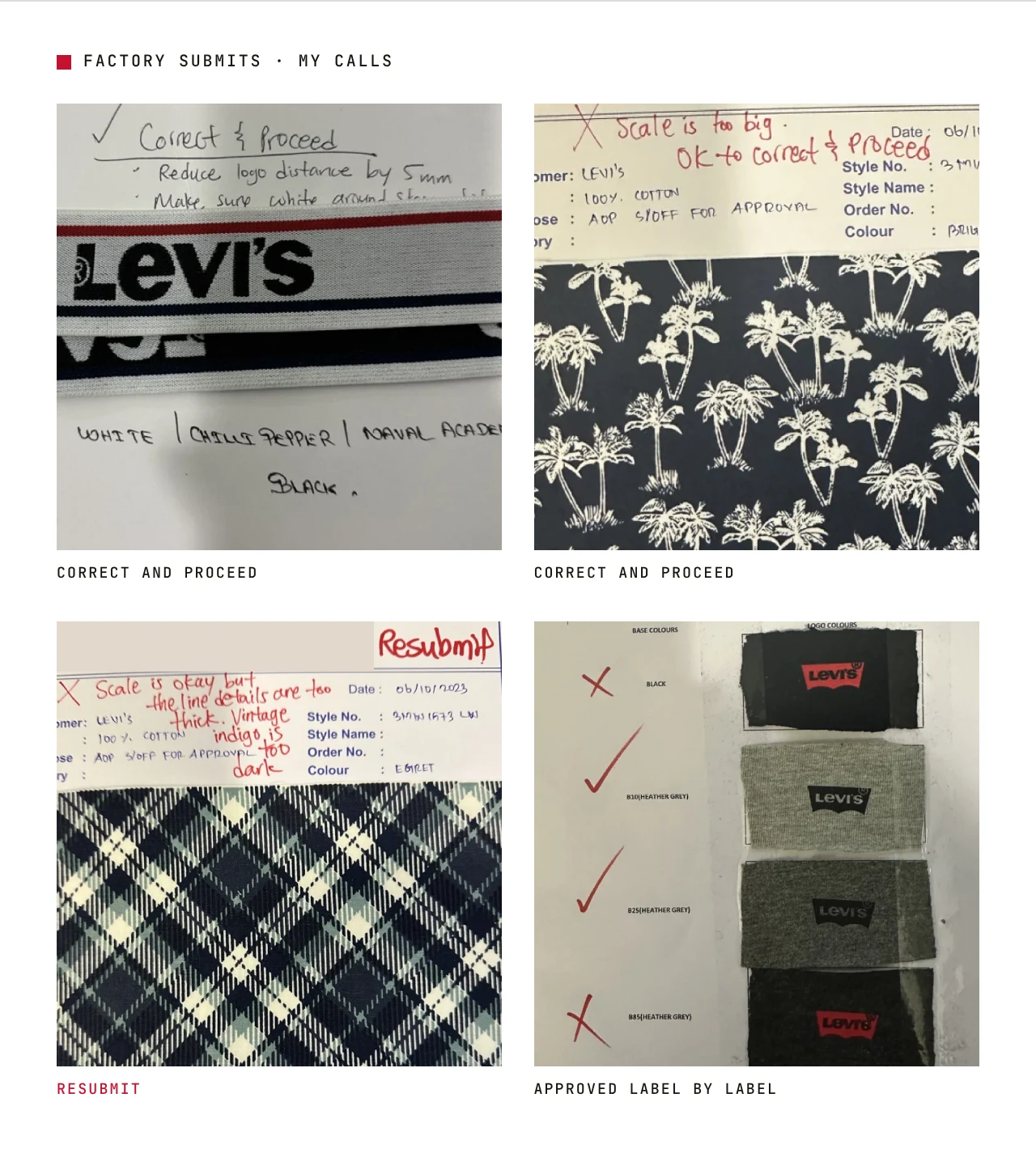
Every sample needed some rework. The real decision was how much. Each round, I decided whether a factory could correct and proceed, or needed a full new sample. A palm print with its scale too big could be corrected and proceed. A plaid with lines too thick and indigo too dark had to be resubmitted. That judgment, not a fixed rule, kept quality consistent without stalling the calendar.
What shipped
A regional line built on what my customers actually bought, led by cotton stretch boxer briefs in solids and stripes, sold in 3 and 4 packs, in reds, blues, black and heathers.
Outcome
5x
Underwear sales growth
$10M to $50M while I led design for North America and Latin America
Red
Best selling fashion color
The direction I argued for and we kept
The colors are what attracted me to these boxers but the comfort sold me.
What I learned
Good design is concise and intentional, and it leads with data. Red won because I paired trend and market research with sales numbers, then made the case in as few words as possible. Whether the decision is a fashion color or a product feature, the designer who brings evidence and says it clearly moves the room.
Next case study